Artist of the Month: May 2026
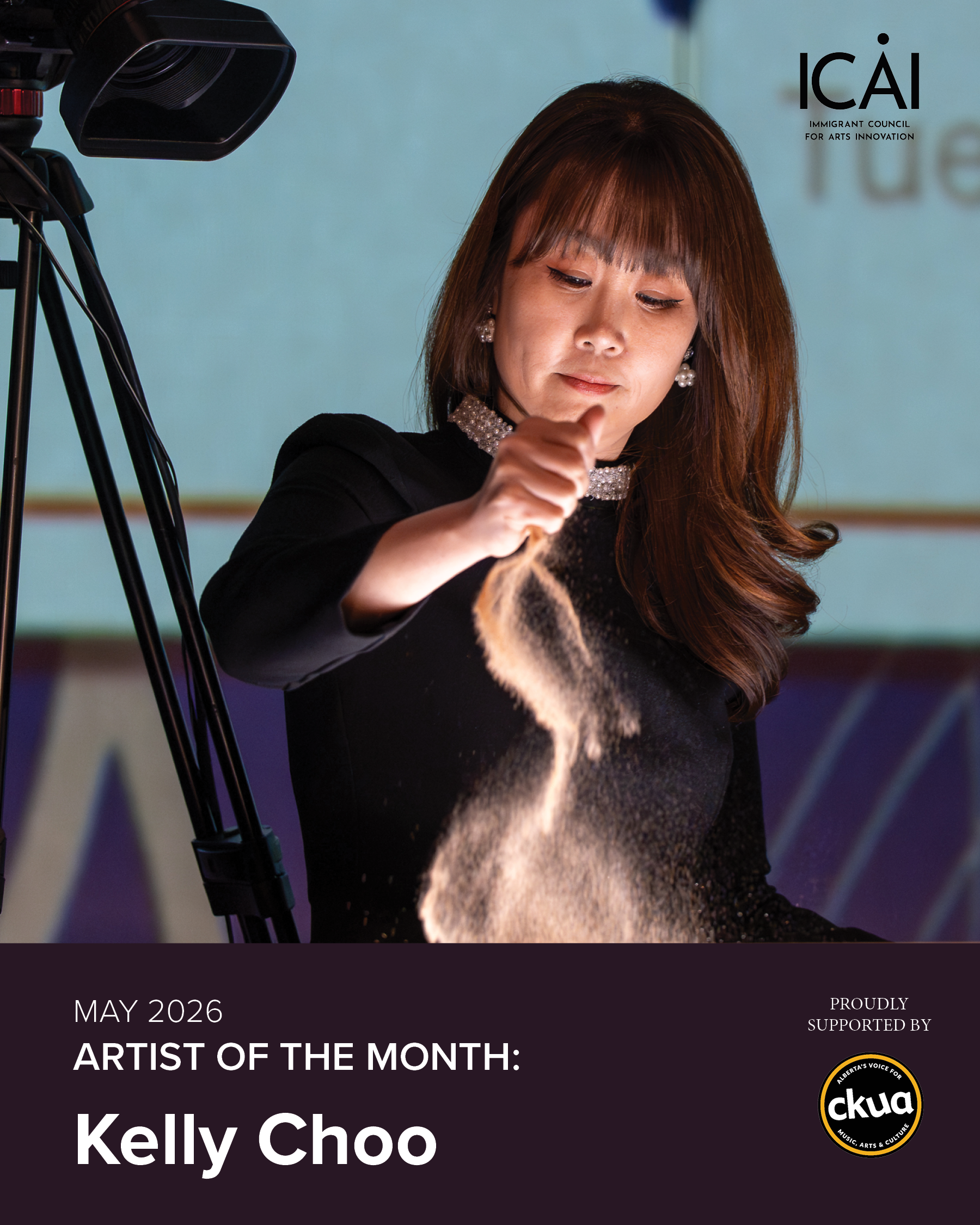
Multidisciplinary Sand Artist (Live Performance & Film)
Based in Calgary, Alberta
Artist Bio
Kelly Choo is a Calgary-based sand artist and social storytelling practitioner with over a decade of professional experience across South Korea and Canada. Her practice centres on live sand performance, community storytelling, and cross-cultural dialogue, using light and sand to create ephemeral visual narratives that transcend language.
In 2024, she completed the Newcomer Arts Professional Program (NAPP) with the Immigrant Council for Arts Innovation (ICAI), deepening her integration into Calgary's arts community. Her work has been presented at Arts Commons (Werklund Centre), featured on public screens at Telus Sky, and performed across schools, senior centres, libraries, and civic institutions.
With over 1,000 performances and national recognition in South Korea, including the Minister of Foreign Affairs Award and the Minister of Public Administration and Security Award, Kelly brings a deeply rooted and socially impactful practice to Canada.
Through performances and workshops, she creates spaces for mental health, empathy, and multicultural connection, contributing to a more connected and inclusive cultural landscape in Calgary and beyond.
Artist Background
My artistic journey is rooted in over a decade of practice built in South Korea. It began with a deeply personal moment - watching my mother lose her mobility after a cerebral hemorrhage. Feeling utterly helpless, I searched for a way to communicate emotion beyond words, and that search led me to sand art: a medium where light and sand come together to create ephemeral visual narratives.
Through over 1,000 performances for government ministries, international organizations, and civic institutions, I wove social messages around multiculturalism, disability awareness, and public safety into my art - a commitment recognized through the Minister of Foreign Affairs Award and the Minister of Public Administration and Security Award in South Korea.
Since immigrating to Calgary in 2023, I have been on a path not of reinvention, but of expansion - engaging deeply with Canada's multicultural communities through themes of migration, resilience, and belonging. Guided by my philosophy, "From Art to Heart," I strive to use light and sand as a bridge between cultures and communities.
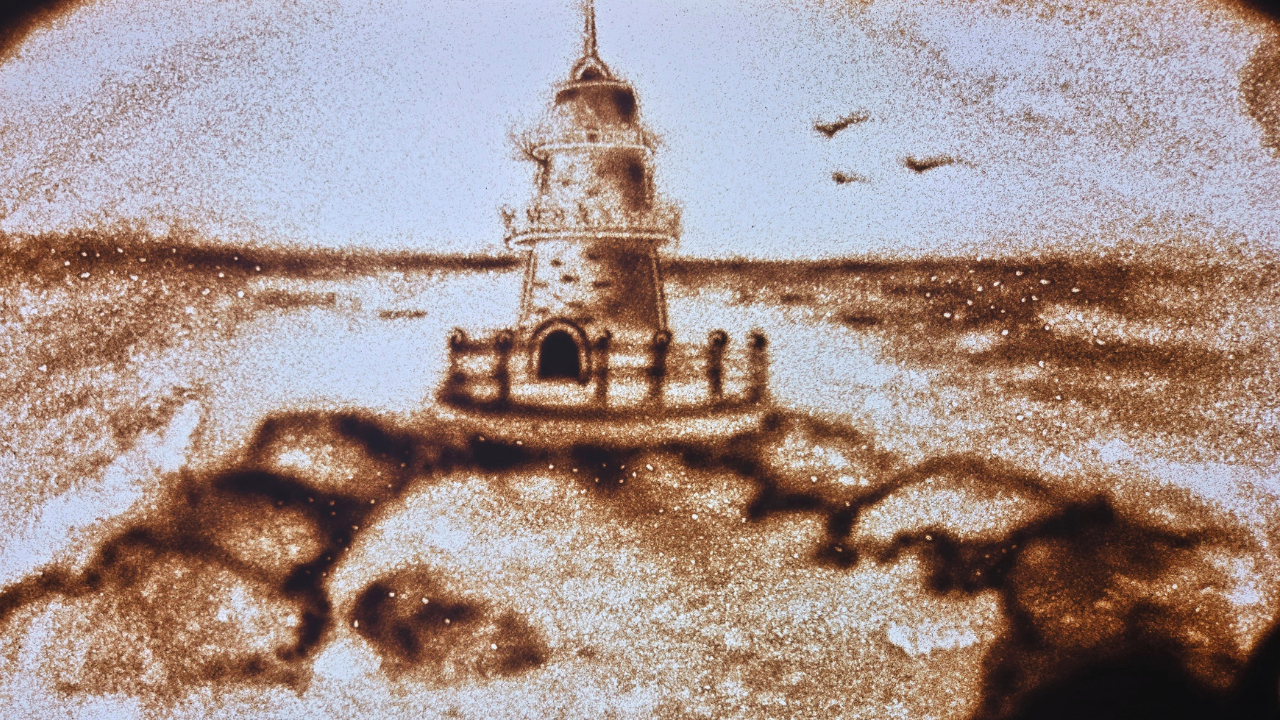
Your journey into sand art began from a deeply personal place. Can you share how that moment shaped your artistic path and the stories you tell today?
My journey into sand art began at a moment when I felt completely helpless. Watching my mother gradually lose her mobility after a cerebral hemorrhage, I was overwhelmed by emotions I couldn't put into words — and I desperately wanted to find a way to express them.
That's when I discovered sand art. Through light and sand, I found a way to convey emotions and tell stories, and within that, I discovered the possibility of comfort and human connection.
That experience remains at the heart of everything I create. My goal is not simply to produce beautiful images, but to tell stories that allow audiences to face their own emotions and find themselves reflected in them. I draw on themes like personal memory, loss, and recovery — feelings that everyone encounters at some point in their lives — and I shape them into narratives that unfold scene by scene. My deepest hope is that long after a performance ends, something emotional still lingers.
What drew you specifically to sand as your primary medium?
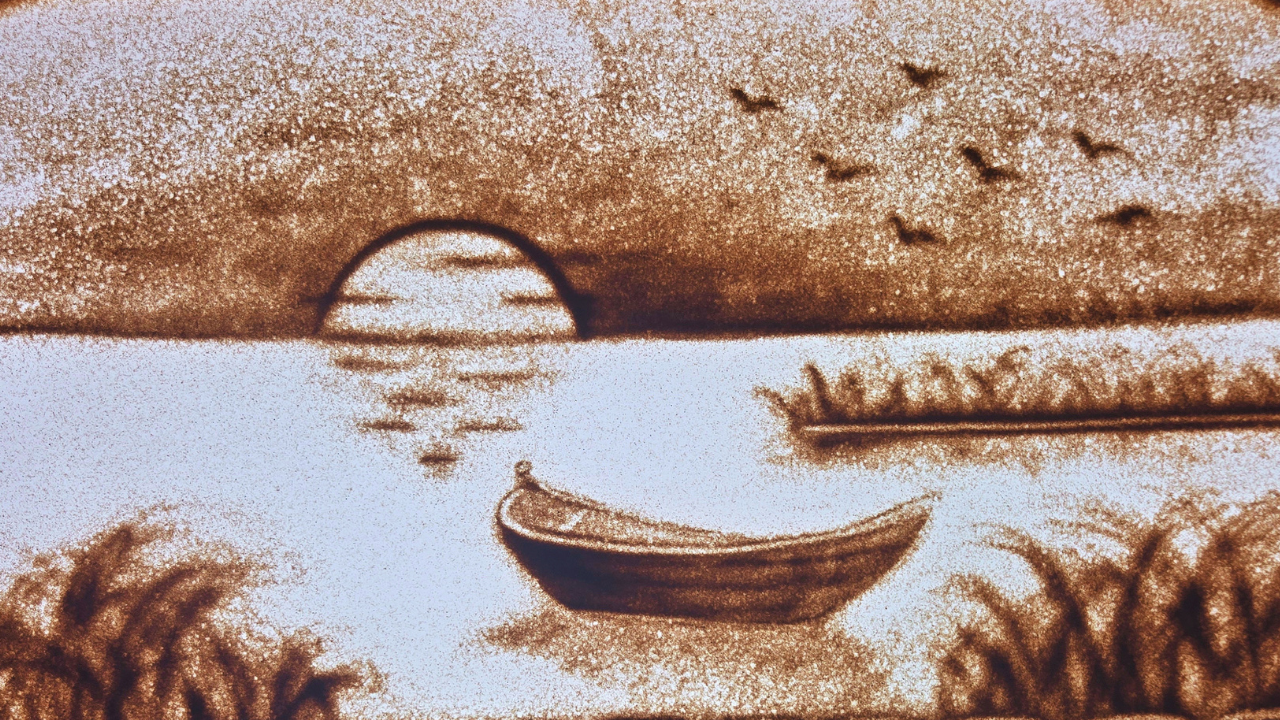
Sand is a material in constant motion. It never stays fixed — it shifts into new forms with every moment, making each performance feel like a living, breathing story.
What drew me to sand was this quality of fluid transformation. A single gesture of the hand can completely change a scene and shift the emotional atmosphere along with it.
Because of this, I think of sand art as an art form that reveals the process rather than the result. As the story unfolds and transforms before their eyes, audiences become deeply immersed. And sand is a material that everyone recognizes — it's familiar to the touch, to memory. The fact that stories can be built and reshaped on that familiar texture is what makes sand art so uniquely compelling. Being able to craft a narrative through moving sand is exactly why I chose this medium, and why I keep coming back to it.
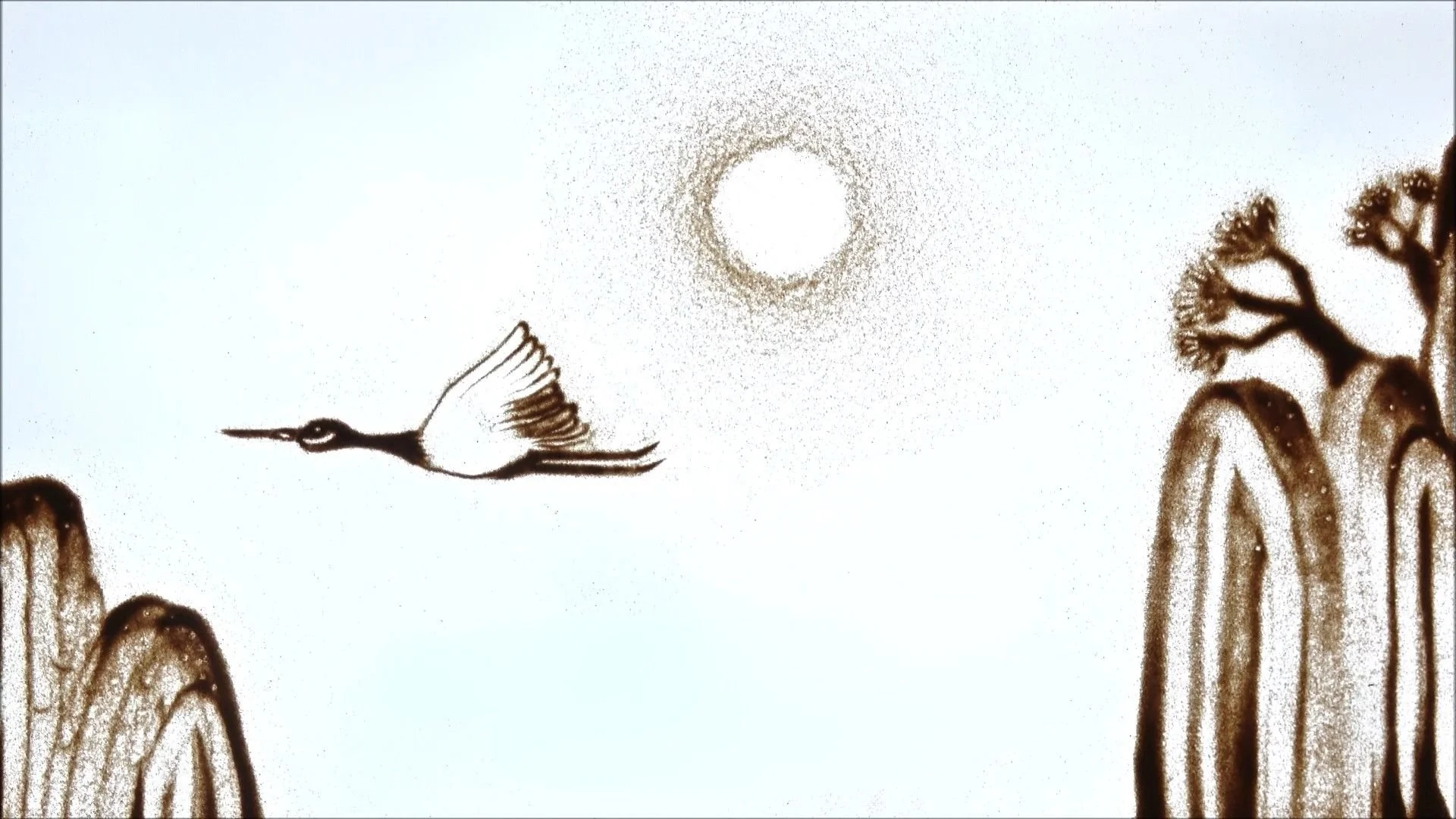
Sand art is beautifully temporary, existing only for a moment before it transforms. How do you think about this ephemerality, and how do you document or preserve your work?
I believe the most essential beauty of sand art lies in its disappearance. Because it cannot be held onto, each moment becomes more precious — it is an art form that mirrors life itself.
I see this ephemerality not as loss, but as an experience that lives on in memory. After performances, I do document the work through video and photography, and share it through social media and archives so more people can experience it. But what matters most to me is the emotion that remains in the hearts of the audience. If a particular moment moved someone, that feeling will last long after the image has gone.
This quality also means that every performance is a once-in-a-lifetime experience. Even when telling the same story, each performance takes on its own flow and feeling.
Your philosophy, “From Art to Heart,” is central to your practice. What does that mean to you, and what do you hope audiences carry with them after experiencing your performances?
"From Art to Heart" captures my belief that art must do more than be seen — it must be felt.
To me, sand art is not about creating images. It's about sharing emotions. I hope that through each performance, audiences are moved to reflect on their own feelings and to sense that they are not alone — that they are connected to something, and to someone.
My wish is that after the performance ends, people carry with them a feeling of warmth, empathy, and a quiet resonance. I believe those small emotional shifts are what bring people a little closer to one another.
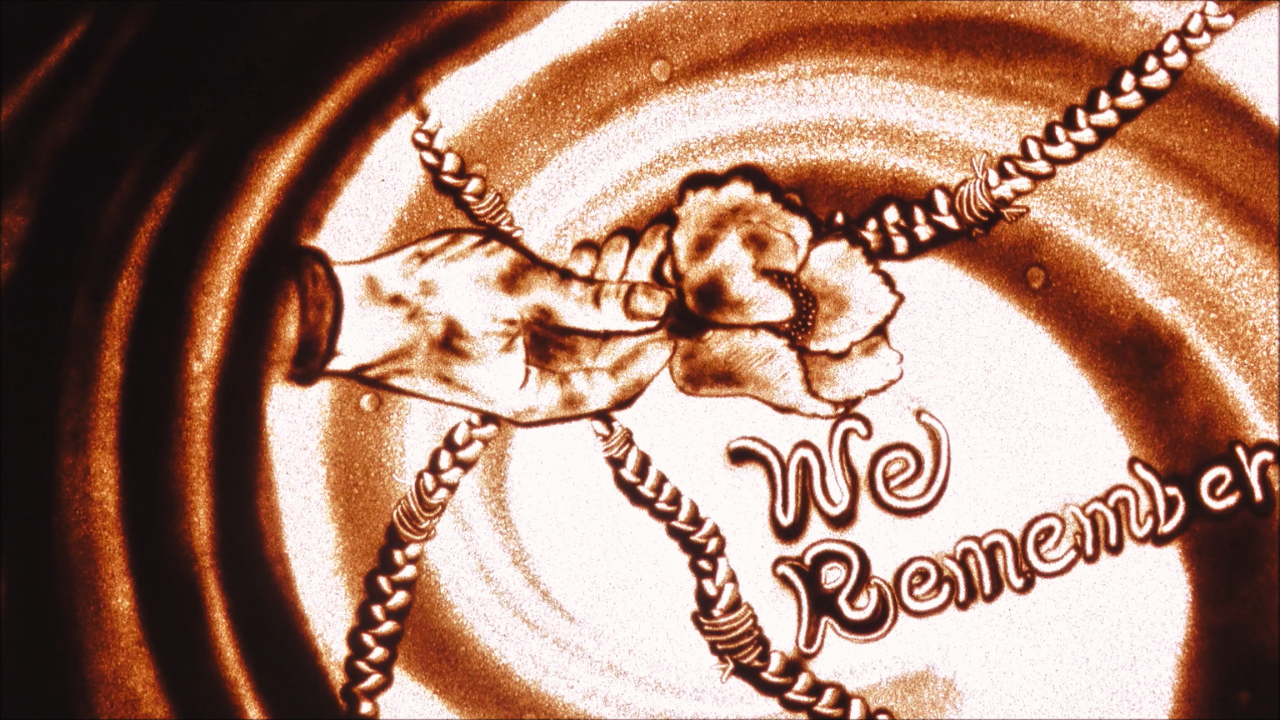
You’ve built a recognized career in South Korea and are now growing your practice in Canada. How has this transition influenced your artistic voice and perspective and what is one piece of advice you would share with emerging artists—especially those navigating a new country or culture?
In Korea, my work often focused on delivering social messages within a cultural context that was familiar to both me and my audience. Coming to Canada, performing in front of audiences with entirely different languages and cultural backgrounds made me realize something deeply: emotion is the only universal language.
Starting over in an unfamiliar place, themes like immigration, identity, and belonging stopped being abstract concepts and became my own lived reality. That naturally led me to focus on creating stories that people from all walks of life can connect with.
I don't think of this transition as a new beginning so much as an expansion. Connecting with more diverse audiences has deepened and broadened both the direction and the depth of my work.
When I first started building my practice in Canada, I often wondered: will my stories resonate here? But it was precisely that sense of unfamiliarity that became my own voice.
So my advice is this: see your background as a strength, not a limitation. It's easy to feel uncertain in a new environment, but the experiences and perspectives that come from that journey are your most unique asset. Rather than trying to follow others, focus on the stories only you can tell.
And above all — keep going. Consistency is the greatest force there is. Even when results aren't immediately visible, opportunities will find their way to you through the act of continuing.
Follow Kelly