Artist of the Month: August 2026
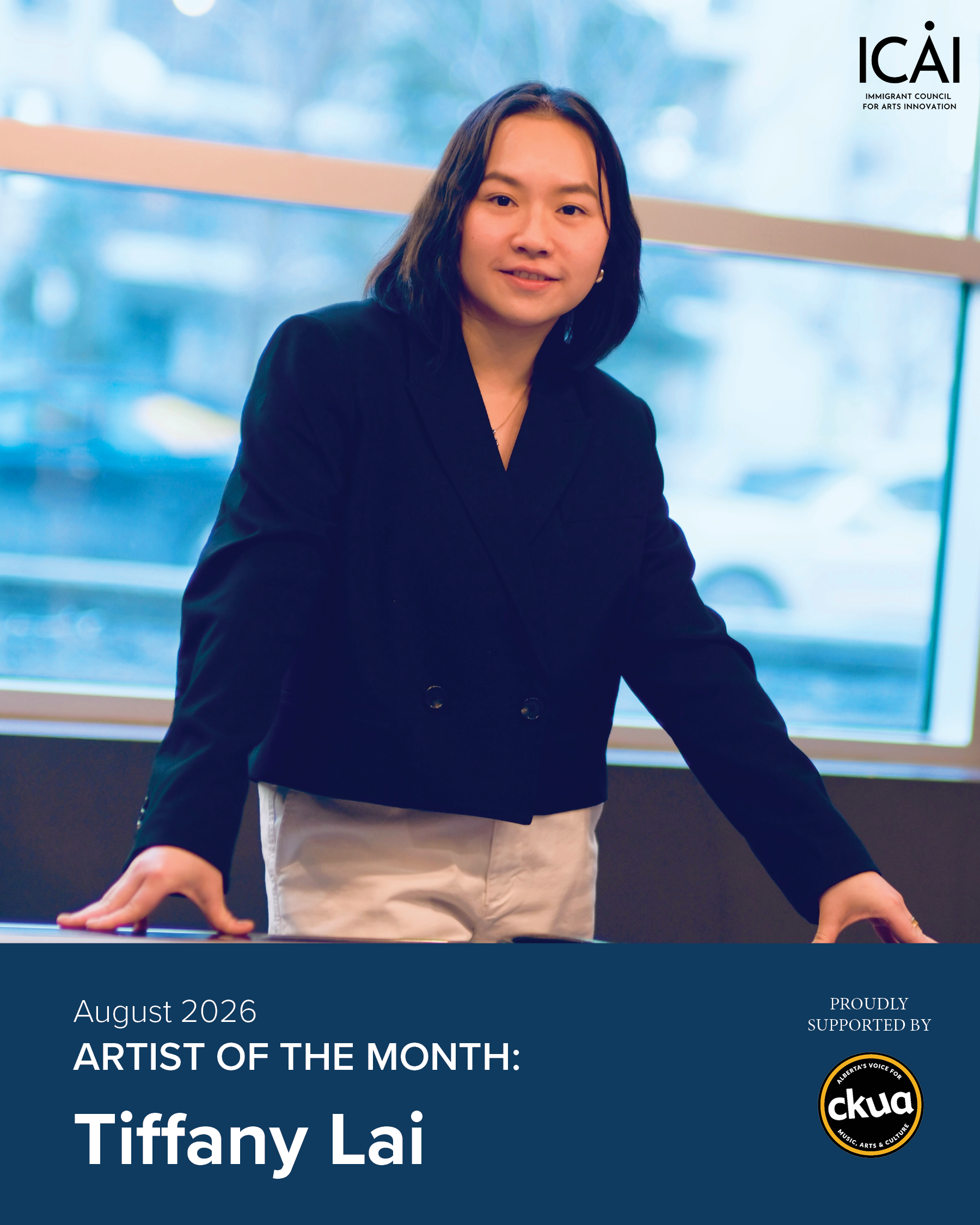
Teaching Artist, Drama Educator, Performer and Registered Social Worker
Based in Calgary, Alberta
Artist Bio
Tiffany Lai is a Calgary-based teaching artist, drama educator, performer, and registered social worker from Hong Kong. She holds a Master of Fine Arts in Drama and Theatre Education with Distinction from the Hong Kong Academy for Performing Arts. Since moving to Calgary in 2023, she has continued to develop her interdisciplinary practice across arts, education, and community work.
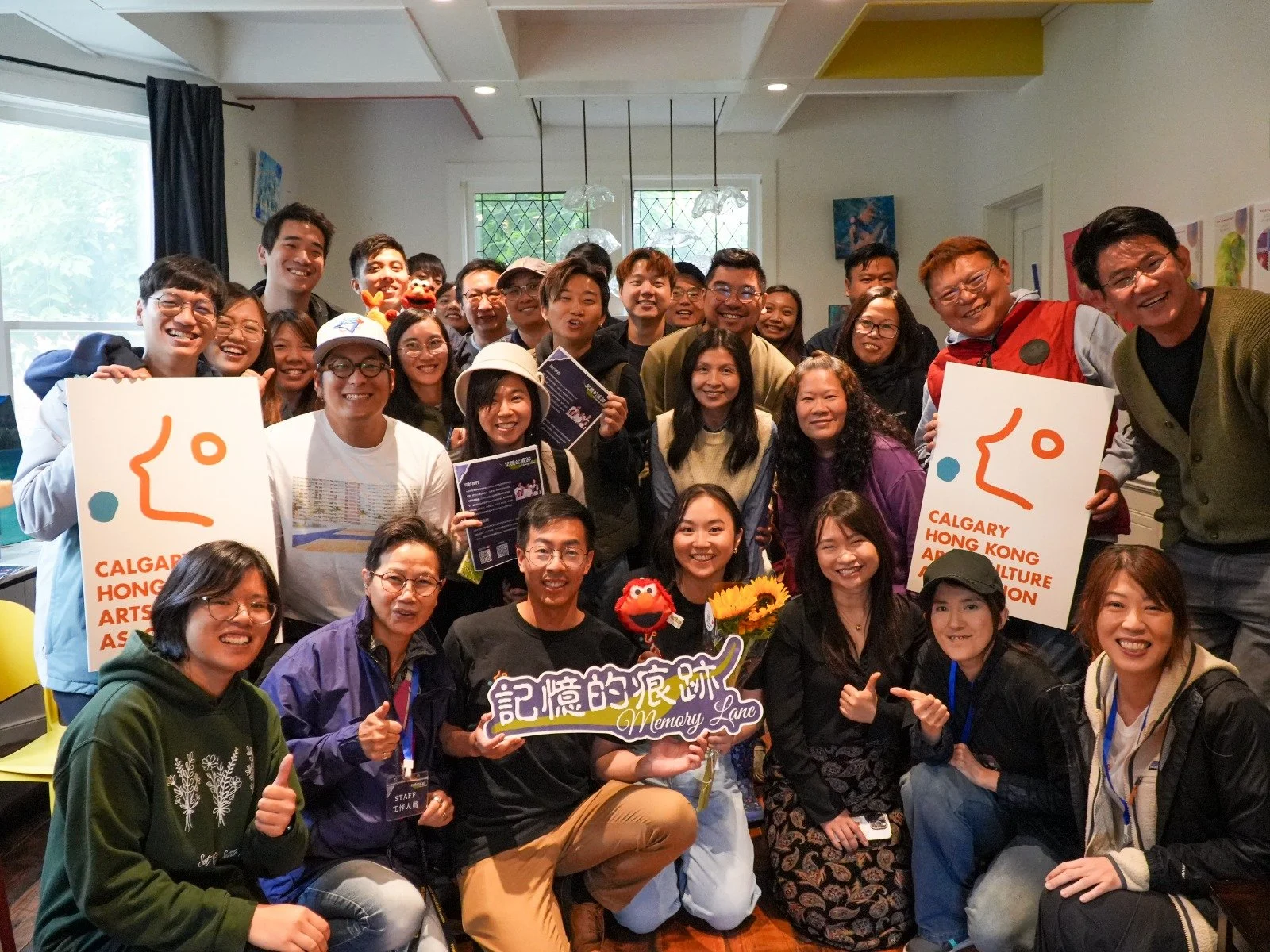
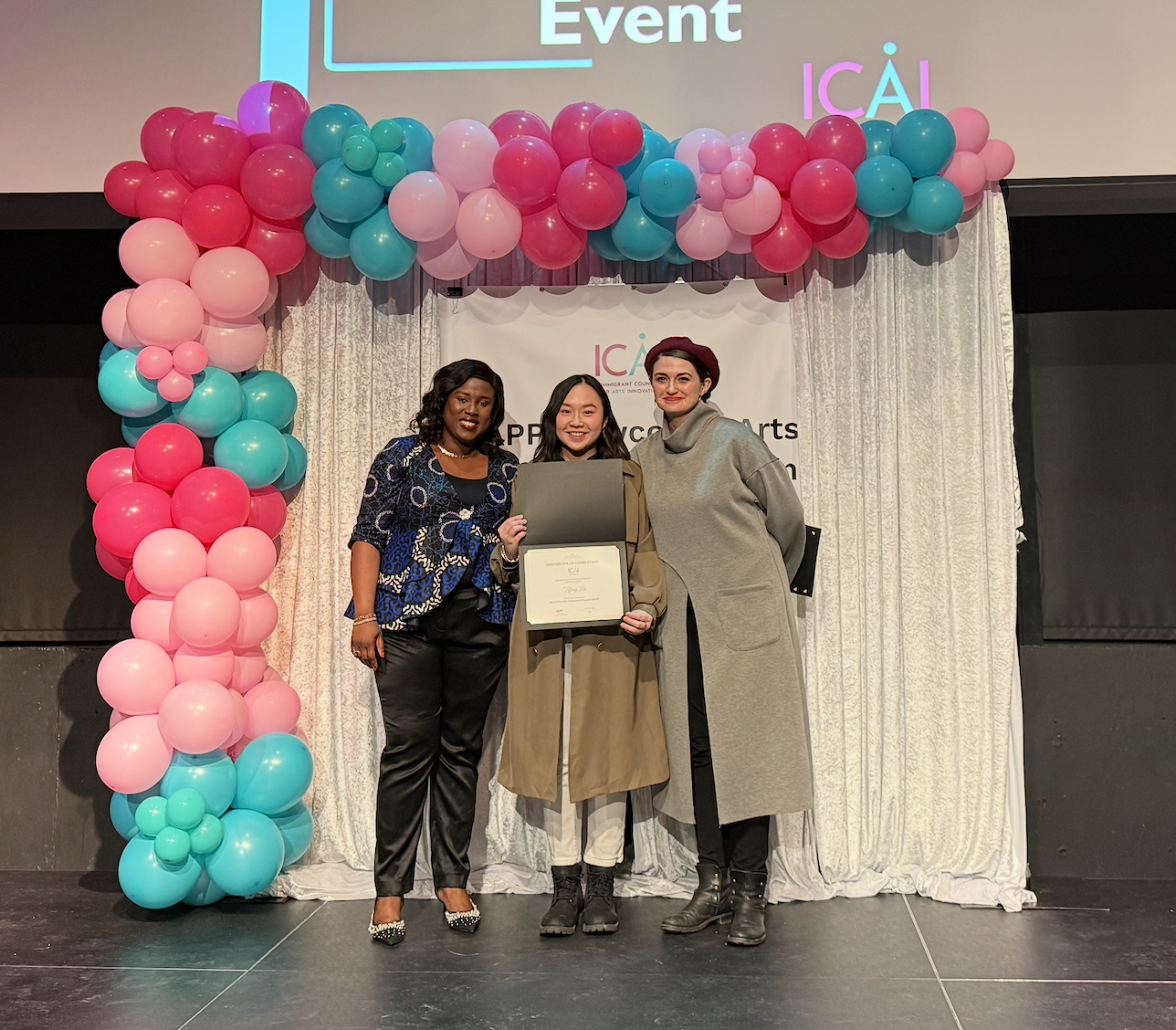
Her work has been recognized through multiple awards and residencies, including an artist-in-residence with the Mount Royal University Artist as Changemaker Residency and artist mentor of The Fourth Space’s Third Culture Futures Residency. She was also selected for the Canada ICAI Newcomer Art Professional Program, where named one of the Newcomer Artists in Calgary and Edmonton. Tiffany is a founding member of both the Calgary Hong Kong Arts and Culture Association and DuO Lab Hong Kong, actively fostering connections across communities through arts and culture.
She has collaborated with over 40 organizations across Hong Kong and Canada, working in school and community settings. Her practice integrates Drama-in-Education into diverse contexts, using drama as a tool for social learning and exploring questions of identity and relationships for children and adults. She also guides social service and healthcare workers to apply drama approaches in their practice and has collaborated with the illustrator of Akemi’s Song to launch parent-child Drama-in-Education activity materials.
Artist Background
My first encounter with theatre was in Grade 4, when my teacher gave me a tiny role with only three lines in an inter-school drama competition. To my surprise, I received the Outstanding Actress Award! I was curious and even asked the judge why. He told me, “In theatre, every character counts and the audience can feel you.” That small moment stayed with me and started my journey into theatre.
Years later, while working as a performer, I facilitated a workshop at a rehabilitation centre supporting people recovering from drug addiction. At the end of the workshop, a participant shared with tears in her eyes that she had not looked anyone in the eye for years because of low self-esteem. Some of the drama games involved making eye contact with others. She tried and she did it. I still remember how deeply that touched me. It made me realize that I wanted to use drama not only to perform, but also to connect with people’s lives.
I stepped away from my full-time social work role to pursue a Master’s degree in Drama and Theatre Education. In Hong Kong, I co-founded a drama education company and developed programmes combining theatre and literacy to support students with dyslexia. The project first received government social entrepreneurship funding and later grew into regular school-based programmes.
Now in Calgary, I continue to work with diverse communities, using drama to explore social issues and support emotional learning. I also explore how Drama-in-Education can respond to the needs of communities here.
Can you tell us a bit about yourself and how you first got into theatre and drama education?
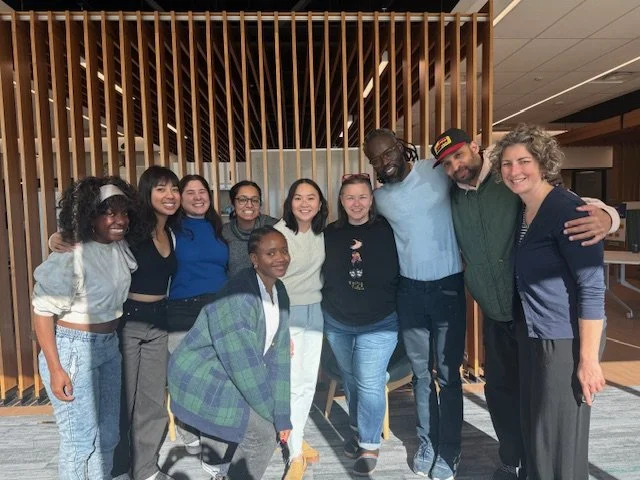
I often describe my practice as a meeting point between drama, education, and social work. I first discovered theatre as a child, but my interest in drama education came later through social work.
My background in social work makes me curious about what’s happening in society and how it affects people’s lives. I also realized that many topics, especially personal growth and social issues, cannot be explored through words alone. People sometimes need a safe and creative space to move, imagine, and share. At that time, I knew what I wanted to explore, but I didn’t know which approach suited me. Then I joined a drama education course in Taiwan. The teacher used drama games to help us reflect on our own lives and the world around us. That experience opened my eyes to what drama could do beyond performance.
Later, my workshop at a rehabilitation centre supporting people recovering from drug addiction confirmed that drama education was the direction I wanted to pursue.
What brought you to Calgary, and what has your journey been like as a newcomer artist building a new practice here?
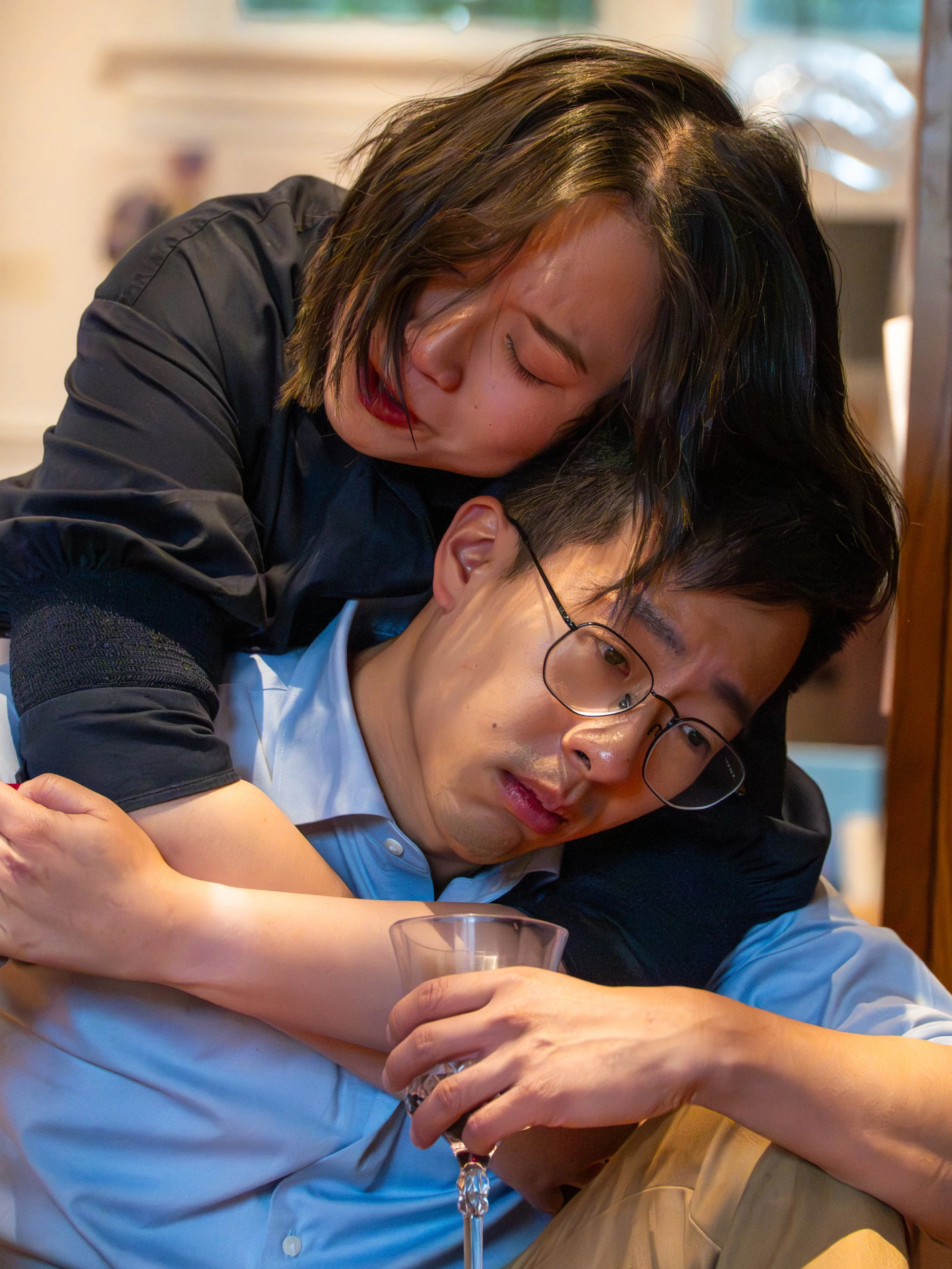
After teaching drama at a Hong Kong secondary school for a few years, I started to think about how drama and theatre education can be used in different places, since every community has different needs and different ways of applying it.
Around that time, a friend who lived in Calgary told me that the city has many arts events and is very welcoming to artists. I searched online and suddenly had a strong feeling that I should come and explore it! My partner also wanted to experience life in Canada, so we decided to take the chance together.
Starting again as a newcomer artist is not easy. I used to teach mainly in Cantonese, so language is one challenge. I also need time to introduce myself and build my name here. But I find that when people see your passion, they are often willing to help. ICAI’s NAPP played an important role in my journey. My mentor Eric Rose shared useful resources and practical tips, and also gave me my first artistic job opportunity in Calgary. Many artists here are also open to coffee chats and making connections.
Another big change is how I see myself. I introduced myself only as a drama teacher in Hong Kong. But now I call myself a teaching artist. For me, being a teaching artist is not only about how to teach art, but also about how I can use art to make a difference in society.
What is drama-in-education, and how do you use it in your work with communities, families, and youth?
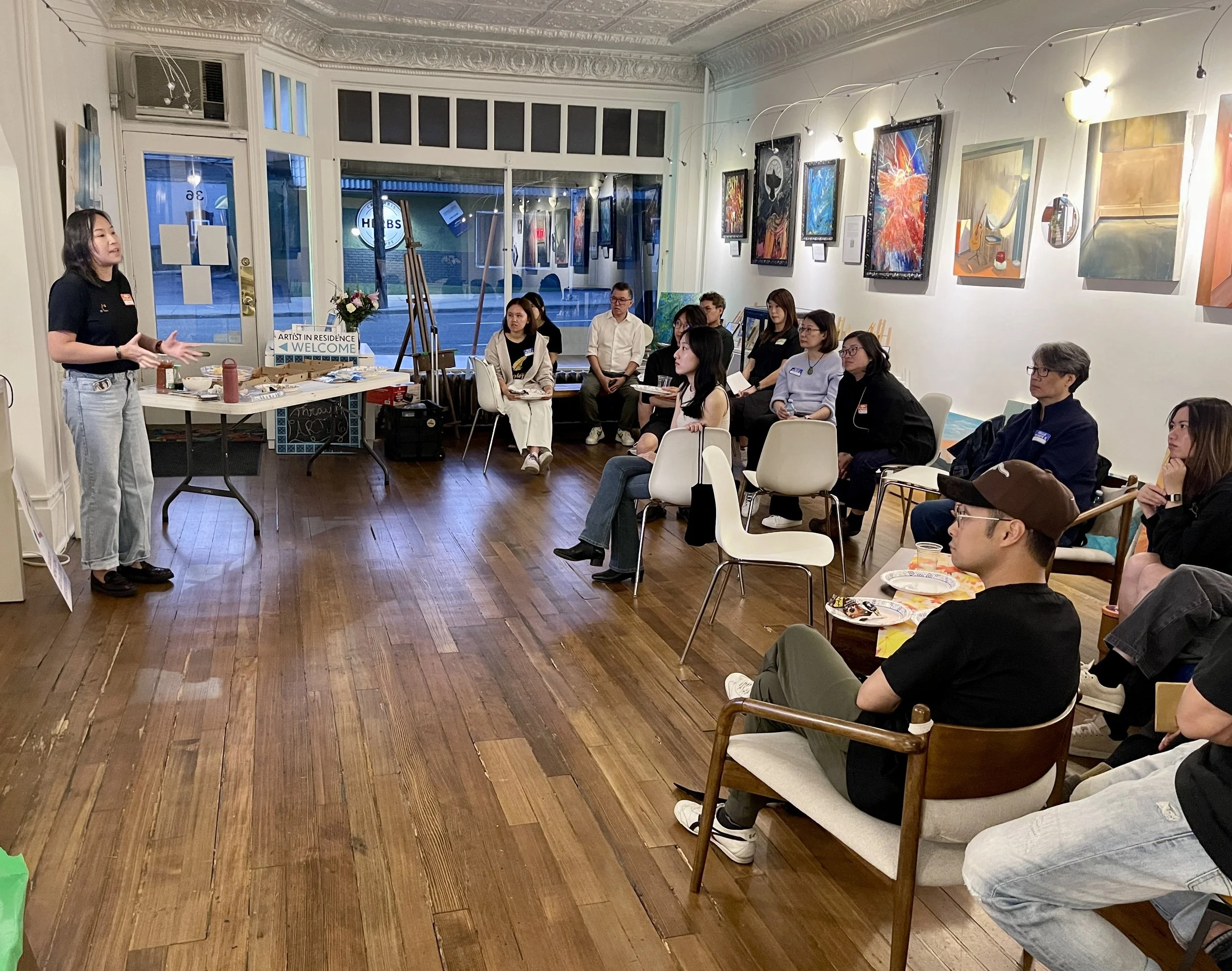
When people hear drama and theatre education, they often think about learning acting skills and creating a performance. That is one approach. But drama and theatre education is actually a broad field that uses drama as a pedagogy and integrates it into different areas of learning. Under this umbrella, my main focus is an approach called Drama-in-Education. It uses stories, characters, improvisation, and drama conventions to help participants explore a theme or social issue. Instead of simply watching a story, participants step inside it as characters. They respond in the first person, make decisions, and solve problems together. After stepping out of their roles, we reflect on those decisions and connect them to our own experiences.
I usually develop these workshops in collaboration with community partners and work with classroom-sized groups over a few sessions. The number of sessions depends on their needs and the depth of the topic. The theme also changes each time, based on what the group needs and what I observe.
For adults, I often use broader, open-ended themes to explore life’s challenges and questions. For example, I facilitated 4 workshops about “Choices” using the story of a famous female painter who struggled between her life goals and family responsibilities in April. Through her story, participants explored whether life always gives us choices. For children and families, I usually focus on social-emotional learning. In one story, a rocket ship could not blast off, and the families became specialists who needed to find the problems and help fix them. Through the story, we explored what it means to make mistakes and how we can face failure in our own lives.
Where do you find inspiration for your work, and what does your creative process usually look like?
I find inspiration in many places, especially people’s life stories and the news. Life’s challenges, the questions people face, and the world around us are the themes that interest me most. Listening to other people’s stories and staying aware of what is happening in the world are important to my work. They help me look beyond my own experience and imagine how I might respond to the same situation.
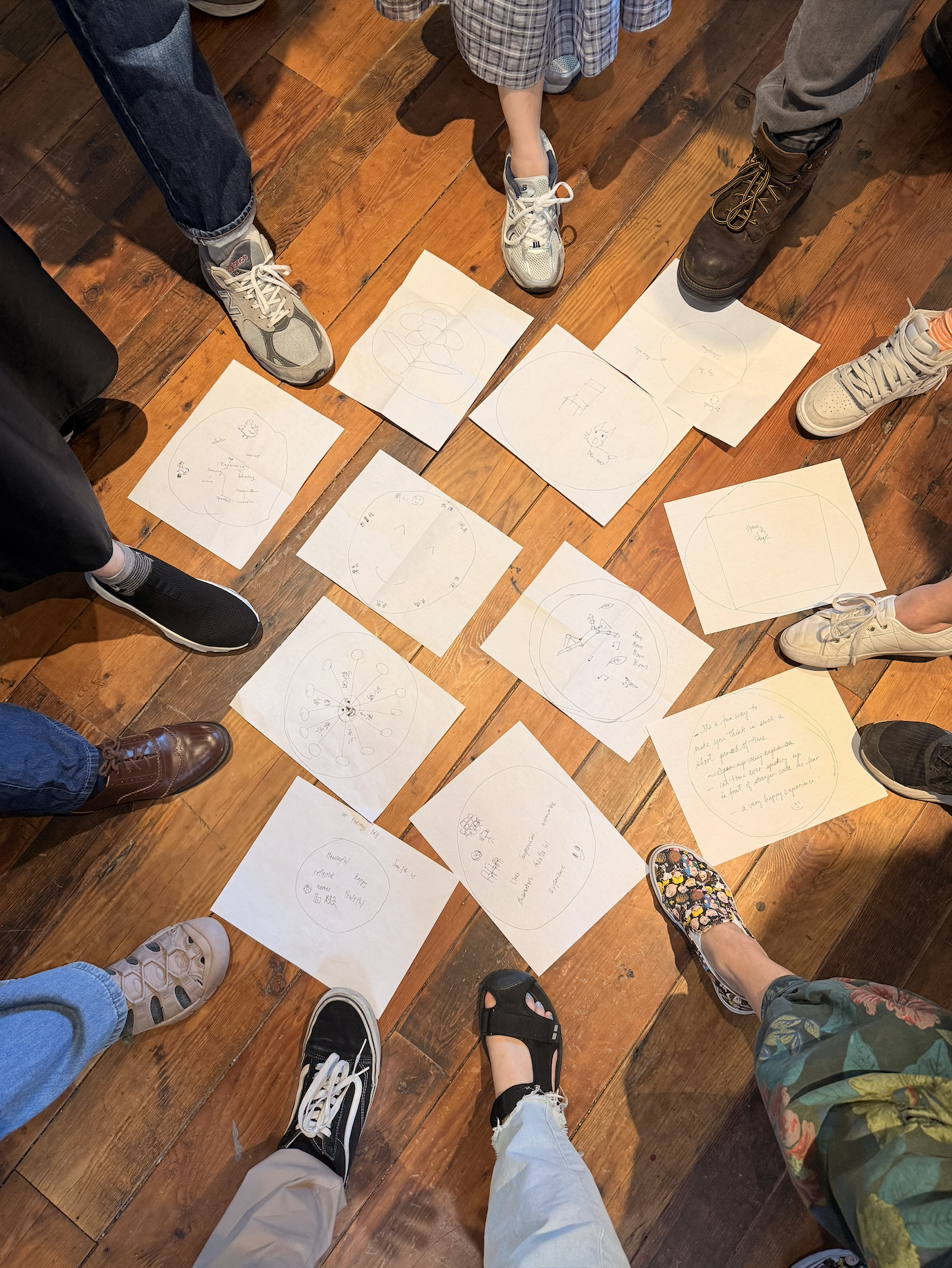
Designing learning experiences is one of the parts of my creative process that I enjoy most. I usually begin with something simple, such as a picture, a poem, or even a single word. One idea leads to another, and the questions grow like branches from a tree. I keep them all in a file and let them sit for a while. I return to the ideas later and develop them again when new connections appear.
What has been the most rewarding project or moment for you since arriving in Alberta?
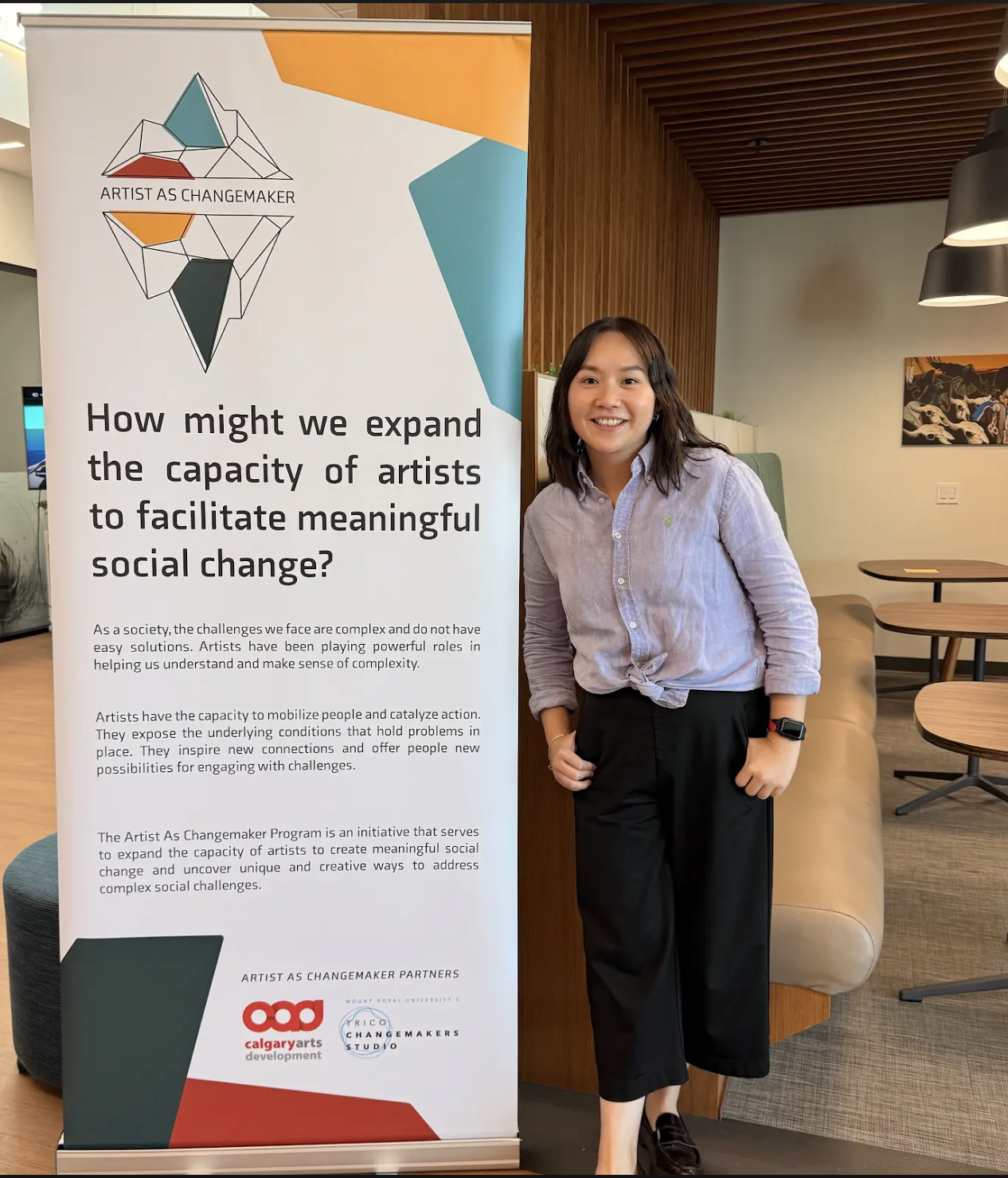
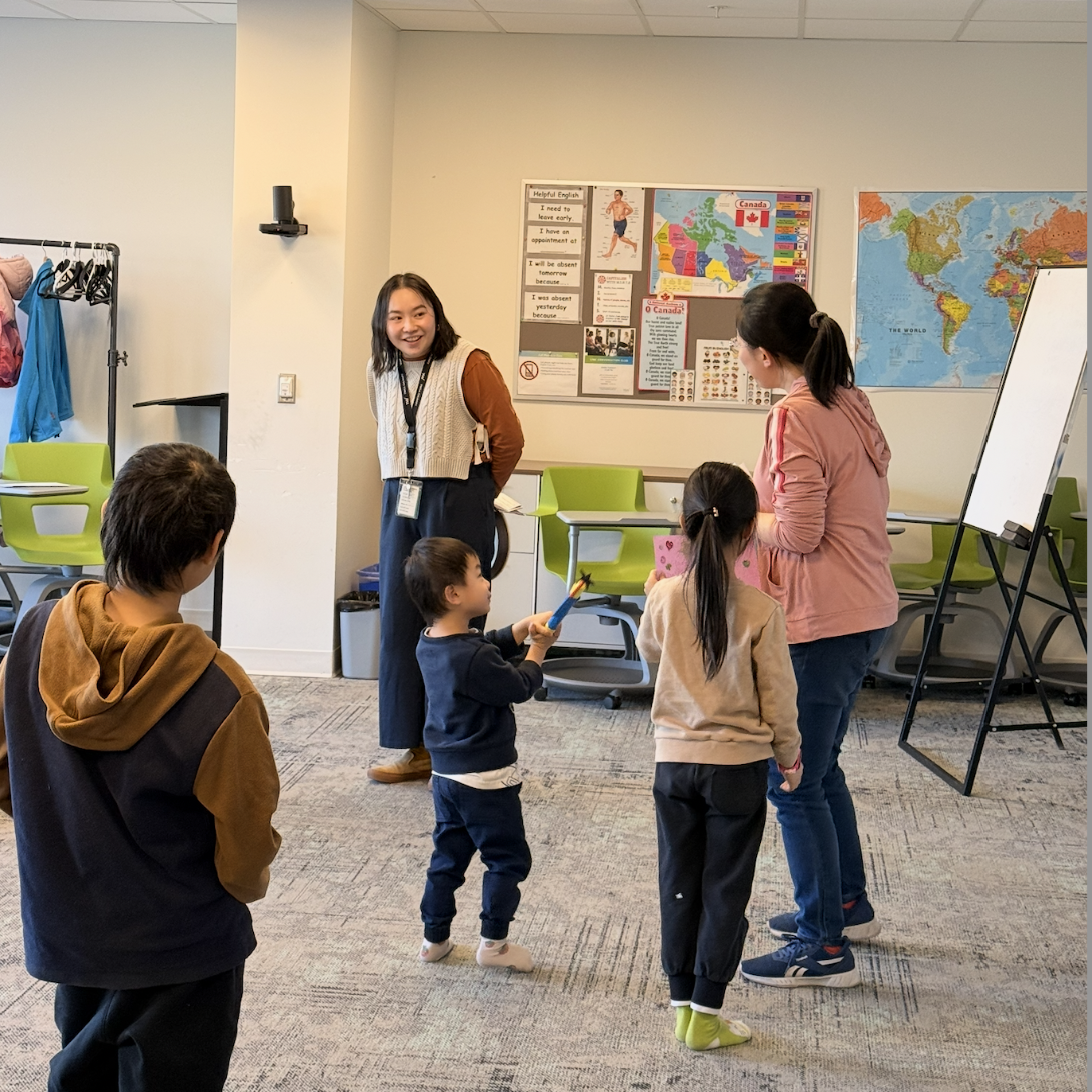
Soo hard to choose!! But I think the most rewarding project is my year-long Artist as Changemaker Residency at Mount Royal University. It was my first-ever artist residency, and I designed a series of Drama-in-Education programs that integrated social-emotional learning for children ages 6–9 and their caregivers. Each session explored identity and relationships through a different question, such as “Who am I?”, “What is love?”, and “How do we get along?” The program also showed caregivers how they could use drama to talk about emotions with their children at home.
The feedback from families made the experience especially rewarding. Many caregivers shared that they learned alongside their children and found new ways to approach challenges together. Some families initially felt that they could not “do drama.” They understood by the end that drama is not only about performance, but also a way to support learning.
The residency also broadens my view of art. I meet other artists in the program and discuss questions that inspire me, such as why art matters in our communities. Monthly training with professors and practitioners from sociology, Indigenous practice, community arts, and other fields also shows me how art can be understood from different perspectives. These experiences help me see how art can contribute to systemic change and give me new ways to explain my own practice.
What's next for you — are there any upcoming projects or goals you're excited about?
I am excited to explore two directions in the near future! The first is my creative team and I are collaborating with a stargazing specialist to organize Drama × Astronomy workshops this September. Participants will use drama and stories to explore the galaxy, followed by a guided observation of the night sky. We are trying to explore about how drama can help people understand different areas of knowledge through an artistic lens!
The second direction is developing an international touring Drama-in-Education project. Some social issues are shared across countries, and I want to explore how different communities respond to the same theme. These experiences could be captured in artworks and brought together in a touring exhibition. Each community could then see other perspectives and learn from one another.
Follow Tiffany